Ubuntu 26.10 Is Targeting Linux Kernel 7.3
Canonical trades a settled kernel for a newer one, betting on a smooth release candidate
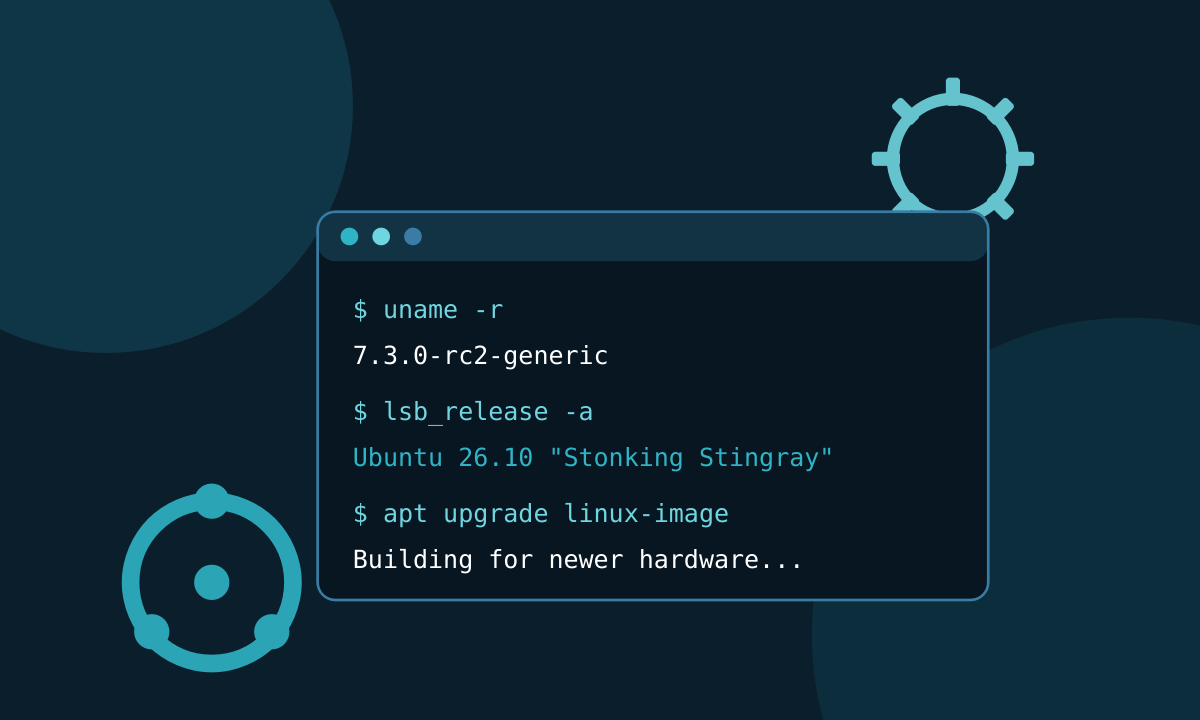
Canonical has revised its kernel plans for the upcoming Ubuntu 26.10 “Stonking Stingray” release. The distribution was originally set to ship with Linux 7.2, but Canonical has now switched its target to Linux 7.3.
- Original target: Linux 7.2
- New target: Linux 7.3
- Release: Ubuntu 26.10 “Stonking Stingray,” due October 15
Why the Change?
The shift comes because Linux 7.2 arrived slightly earlier than expected, landing in early August. Ubuntu’s kernel selection policy calls for shipping whatever upstream kernel is in development at release time, even a version that hasn’t hit “stable” yet, as long as a release candidate exists by the selection deadline. That gave Canonical room to aim higher once Linux 7.3 reached its second release candidate and started tracking toward a stable mainline release by the end of October.
- Linux 7.2 landed earlier than forecast, freeing up the schedule
- Linux 7.3-rc2 is out and progressing on schedule
- Stable Linux 7.3 is expected by the end of October
- Canonical’s Kleber Souza says the move keeps Ubuntu aligned with the latest upstream capabilities, especially for newer hardware, without slipping the release milestones
Where Things Stand
The transition is still in progress. Ubuntu 26.10’s daily builds currently run on Linux 7.2 while Canonical works to bring the newer kernel online for wider testing.
- Daily builds: still on Linux 7.2 for now
- Canonical is enabling Ubuntu-specific features on top of the Linux 7.3-rc1 kernel
- The 7.3 kernel should reach the -proposed repository soon for early testing
- Linux 7.3 likely won’t be fully stable by the October 15 launch, but release-candidate kernels are generally solid, with fixes to follow via software updates
- Ubuntu 26.04 LTS users will get the same kernel later through a Hardware Enablement (HWE) update
What This Means for Users
For most desktop and server users, the practical impact won’t be felt until after installation, when newer hardware simply works better out of the box.
- Laptops and desktops bought close to the 26.10 launch benefit most, since driver support for brand-new silicon usually lags the hardware itself
- System administrators should test production workloads in staging before a wide rollout, since the shipped kernel is based on a release candidate rather than a fully finalized version
- This reflects Ubuntu’s release policy since 24.10: each interim release ships whatever upstream kernel is current at the time, rather than a version locked in far in advance
Pros
- Better hardware support out of the box — a newer kernel typically means broader driver coverage for recent CPUs, GPUs, and peripherals, which matters most for people buying new hardware around the release date.
- Access to upstream performance and security improvements sooner — rather than waiting an extra six-month cycle, users get newer scheduler, filesystem, and security fixes right away.
- Consistent with Canonical’s stated policy — shipping the most current kernel available at release time keeps Ubuntu’s short-term releases meaningfully differentiated from the LTS track.
- HWE path for LTS users — people on Ubuntu 26.04 LTS aren’t locked out; they can pick up the same kernel later through a hardware enablement stack update.
Cons
- Stability risk from a non-final kernel — shipping on a release candidate rather than a finalized stable kernel introduces a higher chance of undiscovered bugs, regressions, or hardware quirks at launch.
- Tight timeline pressure — enabling Ubuntu-specific patches on top of a kernel that’s still an RC close to the freeze date leaves less margin for thorough testing before general release.
- Potential churn for testers — early adopters testing via -proposed may hit issues that get patched only after release, meaning some instability during the transition window.
- Short support life — as an interim (non-LTS) release, 26.10 only gets 9 months of support, so the benefit of the newer kernel is relatively short-lived unless users upgrade again quickly or wait for the HWE backport.
What Is the Current Status?
Ubuntu 26.10 development is still ongoing. Canonical is working on integrating Ubuntu-specific changes with the Linux 7.3 development kernel, while testing continues before wider availability. This means users should not assume that the current daily Ubuntu 26.10 build necessarily represents the final kernel configuration. The kernel can continue to receive fixes and changes before the Ubuntu release is finalized.
Who Will Benefit Most?
The move to Linux 7.3 could be particularly interesting for:
- Linux Admins — users who want access to the latest Ubuntu and upstream Linux developments
- Developers — those who want to test applications against newer Linux kernel functionality
- Cloud and virtualization environments — newer kernel improvements can potentially benefit networking, storage, memory management, and virtualization workloads